Zehava’s cover-up of Chaim’s death
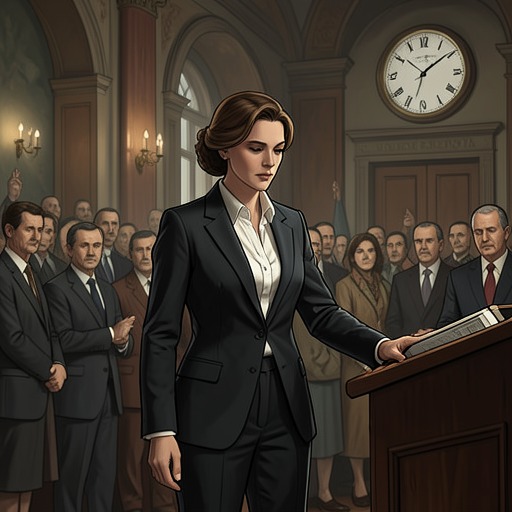
Here There Is No WhyZehava’s cover-up of Chaim Lerner’s death is the central act by which a private killing becomes a public story of suicide, conspiracy, and political necessity. After Michal pushed Chaim away during his assault and he fell from the third-story balcony, Zehava helped sustain a false account of the family’s movements, defended the resulting alibi when Judah Loeb reopened the case, and later urged him not to publish the truth. Her concealment protects Michal from exposure, preserves Chaim’s reputation as a revered Holocaust witness, and ultimately becomes entangled with Charlie’s decision to subordinate investigation to the prospect of peace.
The False Alibi and the Physical Evidence
Zehava’s first layer of concealment was the claim that she and Michal had been shopping for a wedding dress when Chaim died. Michal initially repeated that account, saying that she had gone with her future mother-in-law to Rafik’s Boutique in the Arab Market of the Jerusalem Old City and had taken the dress home that night. A receipt appeared to confirm the story: Rafik Salahmi pointed to the date and time, 5/5/83 at 19:00, while witnesses placed the sound of Chaim’s fall at approximately 18:30. The document therefore seemed to establish that Zehava and Michal were elsewhere when the neighbors heard the fatal thump.
The apparent alibi was strengthened by the surrounding police record. Charlie told Judah that five neighbors heard a sound like a heavy load striking the pavement, preceded by Chaim’s voice saying, “Whoops.” Two witnesses also placed Michal and Zehava away from the apartment. On that version of events, the family could be removed from consideration, leaving the death open to explanations involving Chaim’s enemies, his political or theological ideas, or an alleged blackmail plot. The cover-up thus worked not through one isolated lie but through a mutually reinforcing arrangement of testimony, timing, and documentary evidence.
The balcony itself eventually began to contradict the story. When Hannah Loeb examined Chaim Lerner’s balcony, she slowly traced the dark metal railing with her fingers and studied the dusty floor, treating the scene as a physical text. Her conclusion was that Chaim could not plausibly have climbed over the railing with his injured knee. The four rusting bars were about neck-high to an average man, and the balcony showed no sign of ordinary use, but the crucial question was not whether a determined person might have crossed it. It was whether Chaim, with his damaged body, could have made the movement attributed to suicide. The space converted the false alibi into a forensic problem.
Zehava’s Admission
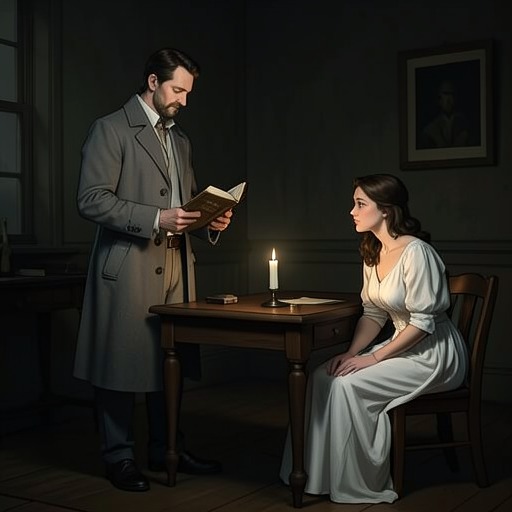
When Judah confronted Zehava, he began with the direct charge that she had lied about her alibi. She first defended the original account by invoking the crowded shop, the many supposed witnesses, and Rafik and his wife, who had allegedly measured Michal for the dress. She also tried to turn the accusation back upon Judah, suggesting that his grief over Mary Loeb’s suicide and his enduring feelings for Michal had distorted his judgment. Her performance made the alibi appear not merely factual but socially protected: a respectable woman, a known political figure, and a future participant in national negotiations would be believed over a foreign journalist.
Judah then identified the weakness in her account. Rafik’s bridal fittings occurred after hours, when his wife was available, so the shop had not been crowded. Zehava retreated from the first version, claiming that the elapsed years had caused her to forget details, while still insisting that the receipt had been given to the police and that the shopkeeper had been interviewed. Her language shifted from certainty to procedural plausibility. Even as the concrete story dissolved, she tried to preserve the institutional residue around it: a receipt, a police inquiry, and witnesses who might be expected to support the record.
Zehava ultimately admitted that she had contacted Rafik after learning that Judah was reopening the investigation. She wanted to ensure that the shopkeeper’s copies of the receipts still supported her account and that the alibi remained intact. The admission reveals the cover-up as an active, continuing process rather than a lie left untouched in the past. Zehava was not simply repeating what the police had once accepted; she was checking the durability of the evidence and preparing for renewed scrutiny. Her concern was not only what had happened in 1983, but whether the old explanation could survive Judah’s questions.
She then told Judah what she said had happened on the balcony. Zehava called Chaim a lying bastard after a dispute, and in a moment of rage invoked the ashes and remains of Auschwitz to condemn his betrayal of the legacy he publicly represented. Chaim responded by raising his hand to strike her. Zehava said that she caught his hand before it reached her face, twisted it, and pushed him away toward the railing, relying on his bad knee and injured hip. He struck the top bar, briefly seemed able to retain his balance, and then rolled toward the ground. The neighbors’ reported “Whoops” and the subsequent thump matched her account of the fall.
The admission changed the meaning of the entire investigation. Zehava did not deny causing Chaim’s fall; she named it as a killing carried out in self-defense. Yet she had refused to tell the police because she believed they would not believe her. Chaim’s infirmity would have made her appear physically stronger, and even an acquittal would have left her publicly marked as the woman who killed “Saint Auschwitz.” Her stated reasons joined fear, ambition, reputation, and national symbolism: she did not want the death to end her career or destroy the authority associated with Chaim’s name.
Protection of Michal
Zehava’s concealment also functioned as protection for Michal. The accepted alibi kept investigators from examining the encounter between Michal and Chaim, whose conduct toward young women and students had been hidden behind his public sanctity. Later evidence made clear that Michal, not Zehava, had been alone with Chaim on the balcony. Chaim approached her while Zehava was occupied with a telephone call, apologized for his behavior, and invited her outside under the pretense of a private conversation. Once the door closed, he attacked her, kissing her and touching her breast. When she shoved him away, he seized her left hand, twisting it so severely that it came out of its socket; she then pushed him hard in the chest, causing him to strike the railing and fall.
Michal’s account confirms the physical logic that Hannah had sensed at the balcony. Chaim’s injured knee and unstable body explain his inability to recover after the impact, while the brief balance on the top rail explains how witnesses could hear a casual-sounding “Whoops” immediately before the fatal thump. The same event therefore exists in three forms: the public appearance of suicide, Zehava’s self-defense confession, and Michal’s account of an accidental killing during an assault. Zehava’s cover-up concealed not only the identity of the person who pushed Chaim, but the violence that made the push intelligible.
Michal later described Zehava as a second mother who may have believed that Michal’s own mother was inadequate or may have felt guilty about Chaim’s conduct. That relationship gives the concealment an intimate structure. Zehava was shielding someone she had treated as a daughter, while also protecting herself from the consequences of having permitted Chaim’s reputation to stand between Michal and the truth. Michal insisted that she had never been in legal danger: Charlie would have buried the investigation regardless of what Judah wrote. The cover-up’s final protection was therefore broader than avoiding arrest. It preserved the family’s ability to forget Chaim and prevented his name from becoming the permanent definition of Michal’s life.
Political Leverage and Charlie’s Collaboration
Zehava’s concealment acquired a second, public purpose when she argued that exposing Chaim’s death would damage an imminent peace initiative. She told Judah that she was negotiating with senior figures in the Palestinian Authority and presented herself as the one Israeli politician whom both sides could still trust. In her account, publication would give religious right-wing opponents the opportunity to destroy her credibility, remove her from government, and end negotiations before they could produce a permanent settlement. The appeal transformed concealment into a political bargain: private truth was to be postponed for the sake of a promised national future.
Charlie accepted much of that reasoning. He confirmed to Judah that Zehava had lied from the beginning, that she had wrestled Chaim away from the balcony, and that he believed her claim of self-defense. He also judged Chaim’s public sanctity against his cruelty toward those closest to him, concluding that prosecuting Zehava served little purpose. More decisively, Charlie believed that damaging her reputation could kill the peace process and thereby sacrifice the possibility of Israel finally making peace with its neighbors. His support converted Zehava’s family protection into an institutional cover-up, backed by the authority of the police homicide division.
Charlie’s method included deliberate misdirection. He encouraged Judah to investigate supposed ideological enemies, including Rabbi Kaplowitz and Meir Alon, and suggested theories involving Chaim’s theology, his political views, the Lebanon War, and blackmail. Judah eventually recognized that these theories were fabricated or unsupported. Charlie had presented himself as someone reopening the investigation, but his actual aim was to keep pressure away from Zehava. A sensational but unprovable conspiracy would look like familiar anti-Israel journalism and provide a reason not to pursue the real suspect. The false trail protected the official silence by making truth appear less credible than speculation.
Peace, Reputation, and the Deferred Truth
The bargain gained practical force through the London Israeli–Palestinian peace talks. Zehava never actually negotiated peace in the grand sense she promised Judah; she and her team held one round of secret meetings with Palestinian negotiators. Charlie arranged for Judah to observe on the condition that he delay reporting until a final agreement and avoid direct quotations. The parties exchanged maps, with Israel offering roughly 95 percent of the West Bank and the Palestinians seeking the whole territory with limited border adjustments for most Jewish settlers. Pisgat David appeared on the Palestinian side of both versions Judah glimpsed, a detail that linked the negotiations to the territorial world surrounding Chaim’s story.
The talks initially seemed close enough to sustain the moral pressure Zehava had placed on Judah. They later broke down over Jerusalem, the right of return for Palestinian refugees, recognition of Israel as a Jewish state, the connection between Gaza and the West Bank, and the role of Hamas. The negotiations collapsed one week after the London meetings, and when Charlie finally permitted publication, The Washington Post buried the report. The peace that had been invoked to justify withholding the truth proved fragile and incomplete, while Chaim’s death remained concealed.
The cover-up therefore exposes a conflict between criminal accountability, historical reputation, and political expediency. Zehava feared becoming the person who killed Saint Auschwitz; Charlie feared becoming the official who destroyed a rare opening for peace; Judah feared that his words could make him either a hero or a historic villain. Each version of responsibility displaced another. The family concealed the assault and the death, the police apparatus preserved the misdirection, and the political argument converted non-disclosure into an alleged act of patriotism.
Final Disclosure and Consequences
The full sequence was disclosed only after Judah had already accepted Charlie’s deal and written his book without resolving Chaim’s death. He left the death as a mystery, offering possibilities such as suicide, illness, Holocaust trauma, accident, or conspiracy, while admitting that these explanations were fictional constructions rather than established findings. The book restored his journalism career and led to work at The Washington Post, but it also made the concealment part of his professional history: he had chosen a usable mystery over the known circumstances of the killing.
Michal later supplied the final account and explained that Zehava had always acted as a second mother to her. Zehava’s protection had been morally compromised but emotionally intelligible: it answered both to guilt over Chaim’s behavior and to the bond between them. Michal also revealed that she had never faced legal danger. Whatever Judah published, Charlie would have buried the investigation. The admission shows that the cover-up did not merely postpone prosecution; it effectively predetermined that prosecution would never occur.
Zehava’s concealment ultimately survives as a layered act rather than a single false statement. It began with a fabricated shopping alibi, continued through the maintenance of a receipt and corroborating testimony, expanded into a calculated political appeal, and was completed by Charlie’s suppression of the investigation. Its consequence was not only that Chaim Lerner’s killer remained publicly unidentified. It also allowed the nation to preserve a heroic image, allowed Michal to escape legal judgment and the burden of public disgrace, and allowed peace to function as a justification even after the negotiations themselves had failed. The delayed truth restores the physical facts of the balcony, but it cannot restore the years in which reputation, family loyalty, and political hope were permitted to stand in for justice.